
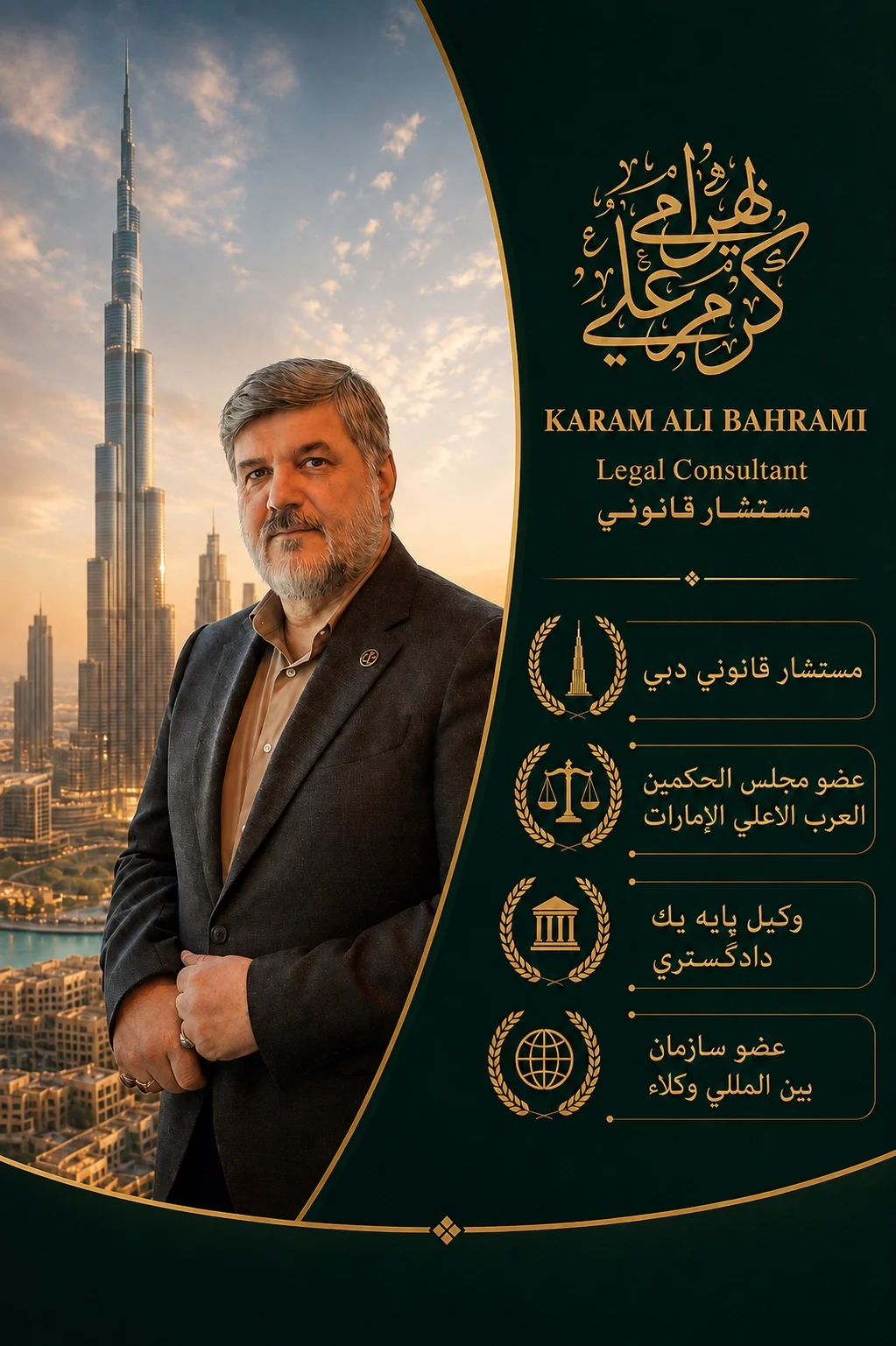
Persian-speaking legal support for Iranian individuals and businesses in Dubai and the UAE. Speak with Dr. Karamali Bahrami about property, family, criminal matters, contracts and company affairs.
Legal support in Dubai for individuals and businesses with connections to Iran and the UAE. Explore civil disputes, family and criminal matters, contracts and company affairs.
Dr. Karamali Bahrami is an Iranian legal consultant based in Dubai, with 20 years of legal practice in the UAE, Oman and Qatar. He focuses on the needs of Iranian individuals and businesses, including matters connected to Iran. His work covers civil, property, criminal and family matters, Interpol-related issues, contracts and company affairs.
Looking for legal help in Dubai? These answers address common issues for Iranian residents and businesses, and what to prepare before discussing your circumstances with a legal consultant.
UAE evidence law recognises electronic evidence, but a screenshot alone does not establish a claim. Authenticity, attribution and context matter. Keep original files, complete message threads and related receipts, and identify which obligation each payment concerns. Their value needs to be assessed together with the circumstances of the particular dispute.
Iranian nationality or the place of marriage does not decide this alone. The 2024 Personal Status Law includes rules for non-UAE nationals; the 2022 civil framework concerns non-Muslims. The parties’ circumstances, requested decision and legally permitted reliance on another law require assessment. Court jurisdiction and a decision’s effects in Iran are separate questions.
Gather the tenancy agreement and Ejari record, renewals, payment receipts, correspondence and notices. For repairs or a deposit dispute, add relevant photographs and handover records. State the requested outcome and disputed amount clearly. Check the relevant service requirements on the RDC website before filing; its rental first-instance service requires Arabic documents or legal Arabic translations.